
Reference: The Jonestown Massacre – And the Assassination of Leo J. Ryan
We have examined how the record of Congressman Leo J. Ryan leading up to the 1978 Jonestown massacre leaves serious questions about the U.S. government’s (and specifically the Military Industrial Intelligence Complex – MIIC) role in that event. We will now examine the events concerning Ryan that occurred after his death which add gravity and scope to the questions raised about the government’s role.
Ryan’s mission was to make the government transparent and the lives of Americans safe from unreasonable intrusion by that government. In his view the Constitution and Bill of Rights demanded that state of affairs. He was aggressively opposed by those in pursuit of the polar opposite, the MIIC. By 1977 the Congressional policing of intelligence agencies by the likes of Rep. Otis Pike (chairman of the temporary House Select Committee on Intelligence) and Rep. Leo J. Ryan (the most active and confrontational intelligence watchdog on the House Foreign Affairs Committee) had driven the Intelligence Community to seek relief at the highest levels of Congress. House Majority Leader Tip O’Neill (D-MA) was the perfect agent for the change they wished to effectuate.
O’Neill would later be remembered as the hard drinking “hale fellow well met” who helped establish the de facto American uniparty by abandoning critical liberal principles to “work across the aisle” with his longtime political opposite, Ronald Reagan. O’Neill personally orchestrated the solution designed to sideline the Pike/Ryan style of oversight once and for all. On July 14, 1977, the House passed H. Res. 658, creating the House Permanent Select Committee on Intelligence (HPSCI). Its creation formally abolished the temporary Pike Committee and thus depowered Pike as a reform agent. The new body’s explicit mission was to centralize and coordinate all intelligence oversight into one controllable locale — effectively obviating the need for the likes of Ryan and his pesky, independent work on the Foreign Affairs Committee.
From day one, the fix was in. O’Neill hand-picked his close friend and former roommate, Rep. Edward P. Boland (D-MA), as chairman and installed Tom Latimer — a veteran of senior intelligence-community posts — as Staff Director. The new committee was deliberately structured to be chairman-controlled, with limited security clearances and a cooperative relationship with the Director of Central Intelligence (DCI, then head of both the CIA and coordinator of the other 15 US intelligence agencies, including all military intelligence branches).
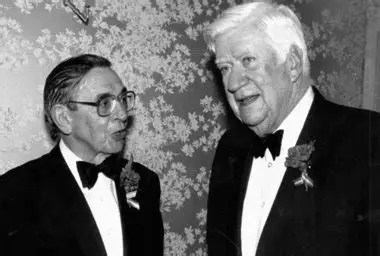
Boland and Latimer worked overtime to protect Intelligence agencies from the prying eyes of Congress, and thus the American people. A 12 September 1978 CIA memo states “Representative Boland introduced amendments which insured that Intelligence Community classified information would be protected from disclosure under the Special Counsel provisions of the Civil Service Reform Bill.” (See 12 Sep 78 CIA memo) The 20 September 1978 follow up, syrupy thank you note from the DCI to Boland demonstrates how unnaturally cozy the relationship the designated watchdog had with those he was entrusted to police. (See 20 Sep 78 DCI letter) Compare that to what the DCI received just 7 days later from Leo J. Ryan (27 Sept 78 Letter Ryan and DCI).
An October 31, 1978 CIA memorandum to the DCI demonstrates the complete power the agency exercised over the single point of Congressional oversight remaining. The CIA’s Legislative Counsel passes on to the DCI a tip given to him by none other than the “aide” to Chairman Ed Boland. It suggests the DCI call Boland directly to encourage a measure to narrow even further the number of staffers who might be made privy to CIA covert ops. Read the entire memo (See Oct 31 1978 CIA memo); it clearly indicates the CIA is not only spying on the committee created to oversee its inappropriate spying it is also taking secret action on that intelligence (the definition of a covert operation). While Boland and Latimer quietly managed that relationship (as the October 31, 1978 CIA memo makes clear — the very day Ryan’s Fraser Subcommittee released its explosive report on the Moonies/KCIA), Ryan kept operating the old way: pressing Hughes-Ryan Amendment (requiring CIA to inform the President in advance of covert operations and inform designated members of Congress in a timely manner thereafter) enforcement, demanding answers on the Hearst matter and Jonestown, and refusing to accept State Department/CIA stonewalling . There you have the fuller background leading to the November 18, 1978 assassination of Ryan.
The Final and Bigger Cover-up
The dark side of the 1980s “Reagan Revolution” was the reinstitution of pre-70’s MIIC secret power and rule over America. It began with the burying of the legacy of U.S. House Representative Leo J. Ryan.
By early 1980 Boland and Latimer were dismantling the authority Ryan had used to police the CIA. The attached 1 Feb 1980 memo from CIA Legislative Counsel to the DCI reports as follows:
“I have since learned that the HPSCI met as a Committee on Hughes-Ryan on 31 January 1980…Although Mr. Aspin wants prior notification of covert action operations, Mr. Latimer confides that Chairman Boland realizes the President will never consent to this. There is clear majority on HPSCI, according to Mr. Latimer, in favor of Hughes-Ryan change.” (See 1 Feb 1980 memo)
By early 1980, Democrat President Carter was hearing the footsteps of Republican Ronald Reagan and his “Make America Great Again” crusade approaching the White House. Several months into the embarrassing takeover and hostage taking in the U.S. Embassy in Tehran Iran, Carter and his administration were rapidly becoming less interested in restoration of civil rights and more interested in projecting a strong military and state security (MIIC). A 22 May 1980 Memorandum from Director of Central Intelligence (Stansfield Turner) to President Carter demonstrates this shift. In it the DCI asks for the President’s personal intervention to assist his effort to further weaken the Hughes-Ryan Amendment to the Intelligence Oversight Act. (See 22 May 1980 memo)
Carter would respond and Edward Boland would eagerly carry out the CIA objectives. The Intelligence Oversight Act of 1980 would repeal in significant part the Hughes-Ryan Amendment. It passed the Senate 89-1 on 3 June 1980. Carter signed it into law on October 14 of that year. They effectively buried the tool that Ryan had left his Congressional colleagues with to carry on his mission of making government transparent and the public protected from privacy intrusion by the government. It would be too little, too late for Carter, whose electoral showdown with Reagan was only weeks away.
The appointed Congressional CIA watchdog was progressively becoming the CIA’s attack dog throughout the year. The attached 11 April St. Louis Post-Dispatch article evidences that:
“Should the Central Intelligence Agency be using American news reporters as part-time spies? The question arose again Thursday in a confrontation between CIA Director Stansfield Turner and some of the nation’s top newspaper editors. Turner said that under his authorization three journalists had agreed to undertake intelligence assignments and underwent security checks.” You will never guess whose dress Turner hid behind for protection from the media’s wrath. “[Turner] added that Rep. Edward P. Boland, D-Mass, chairman of the House Intelligence Committee, had reviewed the decision and “’found it perfectly reasonable’.” The article went on, “Reps. Boland and Les Aspin, D-Wisc, chairman of the House Intelligence Oversight Subcommittee, both inquired into the three cases and concluded that Turner had not been abusing the loophole in the CIA regulations.” (See St. Louis Post-Dispatch)
Now, imagine what would have happened In April 1980 had Leo J. Ryan been alive. Just from what you have learned in this series, do you believe he would have stood for the Central Intelligence Agency infiltrating the media to use it as a state propaganda vehicle? Of course not. Unfortunately, Ryan was the last of the uncorrupted Mohicans in Congress, which has led us to today when it is difficult to discover any media information that is not government sponsored or censored.
Jonestown laid to rest
On a parallel track, in 1980 Boland also personally put period to growing public suspicion that the CIA was involved in Jonestown and the assassination of Leo J. Ryan. He did so in collusion with the Chairman of Leo Ryan’s House Foreign Affairs Committee, Clement Zablocki (D-Wi). The latter was a staunch Vietnam War enabler and, like Boland, friend of the MIIC. He was rankled by Ryan’s high-profile muckraking of the cult of intelligence. With Ryan out of the way he joined in Boland’s efforts to neuter and repeal the Hughes-Ryan amendment, literally depowering his own Committee of any intelligence oversight function. In voting against continuing the Hughes-Ryan Amendment’s requirement that the CIA report operations to his own committee, Zablocki told the press “If we are to have an effective foreign intelligence capability…we must take steps to reduce the likelihood of leaks to an absolute minimum.” Apparently, murdering Leo Ryan wasn’t a sufficient guarantee of CIA secrecy. (see Zablocki weakens Hughes-Ryan). Zablocki went further in the autumn of 1980, voting “to allow a president to ignore rules on advance notice of operations if he thinks even the leaders of congressional intelligence committees should not be told…” It apparently wasn’t enough to block his own Foreign Affairs Committee receiving notice, so he voted to extend that blindness to even the HPSCI if the president wished to. (see, Leeway in Secret Operations of CIA Approved by Panel, Aug 1 1980)
After overseeing two hearings and an investigation into Jonestown and finding no culpability of the State/CIA apparatus, by early 1980 public opinion considered Zablocki’s Foreign Affairs Committee as part of the problem.
In early 1980 Zablocki punted the ball to his comrade Edward Boland and the HPSCI to put the accusations about the CIA to rest. While calling for a final investigation of the matter, Zablocki clearly had already concluded that there was nothing to find, and so announced it to the media: “At no time was there any indication that the CIA was ever involved in Jonestown.” (see Committee Investigates Jonestown, CIA Connection – State News Service 5/25/80) According to Boland’s staff director Michael O’Neill the committee would limit its work to existing documents without interviewing witnesses.
For several months, not a peep arose from the Boland committee investigation. Then on 27 September 1980 the Washington Post’s Jack Anderson dropped his syndicated bomb detailing a load of evidence of CIA involvement in Jonestown. Among other things, he published:
- Ryan’s Aide Holsinger receiving a call from the White House the day of the Jonestown giving a body count, claiming the info came from “a CIA report from the scene.”
- A recording of Jim Jones at the time the mass suicide was in play screaming to his aides to “Get Dwyer (CIA operative Richard Dwyer) out of here before anything happens to him.”
- “Discovery of a huge cache of arms and drugs like Quaaludes, Valium, Demerol and Thorazine” (all psychiatric drugs used in MK Ultra).
- “House probers particularly want to find out if Ryan’s requests to the State Department for accurate information on conditions at Jonestown were turned down to protect CIA covert operations in Guyana.”
(See 27 Sep 80 Jack Anderson column)
Suddenly, and apparently magically, Boland’s investigators were awakened from their deep, long sleep. Just three days after the Anderson column was published Boland – who worked tirelessly for the CIA to guard government secrecy – got his own counter story out on the wires. It stated: “The House Intelligence Committee has expanded its investigation into alleged CIA involvement with the Peoples Temple Cult and Jonestown bloodbath in November 1978.”Apparently worried the Anderson column would engender great scrutiny, suddenly it was no longer simpl an existing document review as it had asserted in the May 25 article cited above. In its eagerness to project thoroughness, it admitted – that far beyond its original mandate it was interviewing CIA agents: “While he acknowledged that some CIA agents had been questioned, O’Neill (Boland’s investigator) declined to divulge their names.”He did not then, nor ever, disclose a single “fact” he learned from those unnamed CIA contacts. Again, Ryan’s former committee chairman – who was not part of the investigating committee and in fact had requested the probe – gratuitously forwarded the coverup: “[Zablocki] said he doubted the CIA connection but added the matter is outside the jurisdiction of his panel.” O’Neill represented, “initial presentations will be made in executive session with no public access…He added that some investigative material would be declassified.” (See Sep 30 1980 article)
Then more crickets for two months.
Finally, Boland and Zablocki would perform a sort of Satanic ritual by exchanging a letter putting the matter to rest on the exact date (two years later) that Leo J. Ryan gave up his life to prevent such sinister intelligence games. In the November 18, 1980 letter Boland announced to Zablocki that “the committee has found no evidence at all to suggest the CIA knew anything about the Jonestown tragedy before it occurred, or that the agency had any connection with either Jim Jones or the People’s Temple.” (See Newhouse News Service) Despite the promise that “investigative material would be declassified”, it was not and has not been to this day. Nor apparently has the letter itself been published or preserved.
Epilogue
By the end of 1980 the CIA and its man in Congress Boland had put the legacy of Leo J. Ryan to rest along with his groundbreaking legislation, the Hughes-Ryan Amendment. With their nemesis eliminated, they wasted no time in continuing to erase the lessons learned in the 70’s by unleashing the Military Industrial Intelligence Complex to effectively neuter and kill the First and Fourth Amendments to the U.S. constitution. By mid-decade the White House and CIA were getting away with foreign and domestic operations that Leo J. Ryan would have killed in their tracks (Iran/Contras scandal, CIA drug running through Rural America, and CIA flooding black urban neighborhoods with cocaine setting off the crack epidemic and inner city decay). Ironically, even the Unification Church (Moonies) intelligence operation that Ryan was onto like white on rice in 1978 was linked to the CIA Contras scandal. Jack Anderson reported a Moonies front group was supporting the Contras in Nicaragua – in spite of Congress’ outlawing such activity. (See Anderson Moonies and Contras). All of it was protected by Edward Boland’s single oversight channel, the HPSCI, under the complete control of the agency it was formed to police.
While no good acts of Leo J. Ryan’s went unpunished, the American oligarchy treated Edward Boland by different rules. Upon retirement in 1984 he was showered with honors by both the White House and the CIA. A Sept 24 memo from Associate Counsel HPSCI to the office of legislative affairs the CIA boasts of Boland’s achievements: “endorsing and authorizing initiatives to modernize and re-build our intelligence capabilities worldwide”, creating “a new era in cooperation with the Intelligence Community and Congress”, and noting that “Mr. Boland…will be presented with Letters of Appreciation from President Reagan and former President Carter…” (See First Sept 24 memo) A second memo of the same date to the DDCI gave talking points for his address that evening at the special honoring of Boland, and included: “[Boland’s] leadership has been fair, reasonably bipartisan, open and always in support of a strong U.S. intelligence function.” (See Second Sept 24 memo)
From that point until today MIIC secrecy, security, and propaganda measures have increased unabated. So too have group Mind Control measures increased, implementing forty years of CIA experimentation. The result is that the right to privacy has been effectively eviscerated while the freedoms of thought and conscience have been invaded in pervasive, mind-numbing fashion.
In a morbid twist, the leading CIA MK Ultra shock doctor Jolyon “Jolly” West (see, Jolly West to Mk Ultra Boss, and the posts it references) would help turn Ryan’s tragedy into a colossal diversion from the CIA Mind Control program rolling out from laboratories into society-wide applications. In a grotesque misappropriation West would later claim the “Leo J. Ryan” award for crusading against cults. That campaign turned out to be a sham. West and his colleagues would use their “anti-cult” fronts to hunt MK Ultra dissent and exposure. Meanwhile, they would pay scant attention to the cults that employed the same methodologies of those used by the Jones’ Peoples Temple. Our next article will examine those methods, their MK Ultra origins and the groups that exercised them.


