Tag Archives: marty rathbun

Basics

Some simple facts would appear to be:

Objects arise in consciousness.  ‘Objects’ is used in the broadest sense to include thoughts, feelings, emotions, pictures, impulses, anxieties, fears, ideas, and all of physical matter reality.

When simply viewed for what they are, objects that arise in consciousness pass through and depart from consciousness just as inexorably and as surely as they arise.

There seem to be two fundamental acts on the part of awareness (or consciousness) that make objects within it persist, become solid and have a lasting, negative effect upon awareness.

Those two acts are pining for (desiring and clinging to) and resisting that which arises in awareness.

Throughout the ages thousands upon thousands of methods and philosophies and religions have been proffered to resolve the effects of these simple facts.

Those paths have been effective to the degree that they have assisted in increasing understanding of and ability to apply the mechanics outlined above.  Those paths have served as betrayal to the degree that they have utilized knowledge of these mechanics in order to obtain conformity, loyalty and labor.

Longevity


Excerpt from Pancho Durango and the Zen of Fishing:

Wilson studied a couple of sea gulls fighting over a shred of dead shrimp on the surface of the bay. When the battle no longer held his interest, he turned and asked the old man, “Pancho, how old are you?”

“I am not sure.” Pancho continued to slowly reel and jerk his line, his attention thirty yards out and ten feet deep.

“How can that be?”

“I was born deep in the Copper Canyon. We did not keep records of anything, including birth.”

“Well, we know you are at least in your seventies and perhaps in your eighties.”

“Perhaps.” The conversation held less interest for Pancho than the three dimensional chess match he silently waged with fish that apparently only he could see.

“And you are strong of mind and body. “

“Some apparently believe so.”

“What is the key to longevity?”

Pancho said with no hesitation, and with as much emphasis as you’d expect from a request for another live shrimp to hook for bait, “You live as long as you have something worthwhile to give”.

“And who is the judge of that.”

“Only you of course.”

Wilson frowned as he squinted at the horizon. “So, goodness and righteousness have nothing to do with it?”

“It all depends on what you consider is good and right.”

Wilson sunk his head and smirked apathetically at the ripples beneath his feet. Once again Pancho had blithely turned a simple question into a deep philosophical riddle. Time to rebait the hook and make another cast. Always the right thing to do when you know your next question will be hit out of the park by the old man like a twenty year old on steroids.

Myth, Mysticism and Insight


In The Tao Of Physics, Fritjof Capra makes some interesting observations on the subject of myth in mysticism and what those of insight come to understand about such.   I had as much in mind when I wrote of constructs in the book ‘What Is Wrong With Scientology?’,  but clearly did not articulate it nearly as well.

“Indian mysticism, and Hinduism in particular, clothes its statements in the form of myths, using metaphors and symbols, poetic images, similes and allegories.  Mythical language is much less restricted by logic and common sense. It is full of magic and paradoxical situations, rich in suggestive images and never precise, and can thus convey the way in which mystics experience reality much better than factual language.  According to Ananda Coomaraswamy, ‘myth embodies the nearest approach to absolute truth that can be stated in words.’

“The rich Indian imagination has created a vast number of gods and goddesses whose incarnations and exploits are the subject of fantastic tales, collected in epics of huge dimensions.  The Hindu with deep insight knows that all these gods are creations of the mind, mythical images representing the many faces of reality. On the other hand, he or she also knows that they were not merely created to make the stories more attractive, but are essential vehicles to convey the doctrines of a philosophy rooted in mystical experience.”

If there is truth to this, what does one make of the understandings or motivations of those who insist upon literal conceptualizations of imaginative religious mythology?   Are they of deep insight themselves?  Are they actively preventing others from developing or attaining deep insight?   You might have experienced some of the cognitive dissonance (or analytical and/or intuitive enturbulance) that is concomitant with inculcation of fantastic mythologies, not as part of an acknowledged ‘mystical experience’ but instead as cold, hard, unquestionable fact.  Or perhaps you are comfortable with the security that comes with faith and belief in mythology.

Name Calling and Labeling


name-calling

One thing that I have observed over the years is that name-calling and affixing derogatory labels to people usually exacerbates any perceived shortcomings in the target.  It is in the nature of people to defend themselves when under personal attack.  When it comes to using labels and name-calling to make nothing of the target, oft times the target reinforces the behavior labeled in an effort to somehow vindicate himself.

Name-calling seems to be an ingrained habit with some.  Folks might take some form of temporary satisfaction by considering themselves greater than those whom they condemn by shouting condemnatory labels. But, in the long run they are not really lessening the target nor are they increasing their own stature by doing so.  To the contrary, they wind up lessening their own integrity by defining themselves in the context of their chosen nemesis.  That fact alone makes them the effect of and thus less than their perceived enemies.

A valued teacher of mine once said ‘when you point your finger at someone, look to where your other three fingers are pointing.’

finger

Where To Plant Your Feet


synchronicity

Ta-sui was asked, “Buddha’s truth is everywhere; so where do you teach students to plant their feet?”

He replied, “The vast ocean lets fish leap freely; the endless sky lets birds fly freely.”

– translation by Thomas Cleary


The Self

self

Chih-men was asked, ‘What is my self?’

He replied, ‘Who is asking?’

The questioner said, ‘Please help me more.’

Chih-men said, ‘The robber is a coward at heart.’

– translated by Thomas Cleary

scientology

Scientology is a religion.  I have seen ample evidence both from within its organizations and from without them that scientology is workable to the degree one believes in it.  It works when one believes that it will.  It does not work when one does not believe that it will.  It is just like any other religion in that regard.

I have previously discussed the cognitive dissonance set in place by scientology’s insistence upon being considered religion and science at once; a feature that results in scientologists’ apparent inability to differentiate belief from demonstrable certainty.  Beyond that particular feature scientology ought not be that difficult to get over.

I no longer wish to debate with religionists over their firmly held beliefs.  The majority of them find some level of comfort and security in keeping their beliefs undisturbed.  The better part of the rest seem to only get from such discussions some argumentation with which to triumphantly declare, ‘aha, it is a fraud!’;   further motivation for continuing to beset themselves with it.

My heartfelt advice for those who no longer believe in scientology and yet continue to haunt themselves over it, is that you give it a rest.  Give yourself some space to come to grips with the fact of scientology’s religious nature. Once you do that you can fairly easily decide whether you want to continue to believe in it – or obsess with it – or not. Once you do that the rest of the way in or out is fairly simple and requires little to no guidance.

Causation


hold-the-sun

Here is a passage from the Tao that appears at a critical juncture in my in-progress book.  I have also referred to it in previous posts.

Do you have the patience to wait till your mud settles and the water is clear?

Can you remain unmoving till the right action arises all by itself?

Review where your important cognitions, realizations, or problem solutions come from.  Do you create them?  Or do you let go sufficiently so that you may perceive them as they arrive all on their own?  Are you the author of something brand new to the universe?  Or do you open yourself up to see something that was already there?  Do the brilliant ideas come when you extrovert sufficiently from self and self- importance to make way for them?  Or do they come when you are undisturbed – or encouraged – to gather your true master-of-the-universe bearing sufficient to birth another masterpiece?

Scientology and Intuition

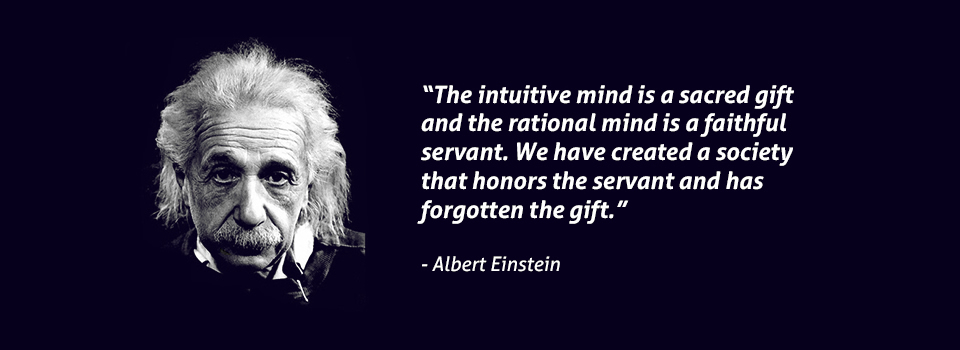
the-intuitive-mind-blue


reference: Scientology and Presentiment

Several commenters speculated as to my purposes for posting Scientology and Presentiment.   My purpose was simple: I wanted to hear what other people thought about it.  As far as implications are concerned – that is the question I asked folks to weigh in on – my view before I posted was largely reinforced by considering the hundreds of comments.

From my perspective, the most important implication is that it is more evidence that Scientologists are trained into constructs – to the point of confusing the map for the territory.  Their attention is focused with a great deal of intention and discipline on mental trauma.  Conscious, two-valued logic based, and three-dimensional time-space construct based perception is finely disciplined. This results in increased focus and force of intention.  The unthinking, yes/no binary device called the e-meter facilitates this training. In exercising such scientologists are led toward attainment to pre-defined abilities and states of consciousness – known as end phenomena in Scientology auditing.  They are promoted and preached as static, permanent states (again using two-valued logic, materialistic terms).   I have seen evidence of people becoming better at communication, problem solving, personal responsibility, handling of upsets, and moving out of fixed conditions through application of these constructs.  Sometimes they even achieve alleviation of psychosomatic disabilities along the road.

Then, rather consistently, I see them forfeiting their intellectual honesty and curiosity in vain defense of what got them a boost in the aforementioned abilities.  In the course of that defense I have witnessed those people become decreasingly effective at communication, problem solving, personal responsibility, handling of upsets and dealing with fixed conditions.

One faculty that is critical to spiritual growth is neglected, and then disabled, along the scientology route.  In my view it is at the heart of the decline and reversal noted above.  That is intuition.  When I use the term intuition I use it in its broadest possible sense.  That includes what the world at large considers extra sensory perception (including presentiment) and cognition and what Scientologists have referred to as ‘OT abilities.’

It has been said that the sixth sense could be considered conscience and the seventh sense intuition.  I think that paradigm makes a lot of sense and have found it workable in practice.  If one abides and nurtures a healthy conscience, attention and awareness is cumulatively freed to perceive and explore greater horizons.  That includes those horizons that are not accessible to the traditional five senses; but are visible through intuition. In Scientology, once the aforementioned, dictated abilities are attained (and even during the quest), one is required to forfeit his conscience.  I covered how that occurs in the books What Is Wrong With Scientology? and Memoirs of a Scientology Warrior.  I cover it in greater detail in A Course on Graduating From Scientology, and suggest means for not only recovering conscience but also rising to the level of intuition.

Initially, intuitive powers are largely ignored in Scientology.  As much as Hubbard at times preached the value of pursuing positive gain rather than negative gain (e.g. mid-fifties Ability Congress, Freedom Congress, etc) the scientology bridge ultimately focused on virtually nothing but attempting to remove the negative.  Hubbard went so far to definitively announcing a ‘law’ back then that if one focused on disability he would ultimately get more disability and if he focused on ability he would get more ability, and then constructed the entire bridge in defiance of that law. In scientology one’s attention  is focused on removing disabilities. One begins his auditing with lengthy sessions defining Dianetics and Scientology constructs.  He learns early on that nothing proceeds unless the simple ohm meter (the emeter) with its mechanical yes/no answers green lights it.   Attention is focused so as to detect the negative, that which is said to be foreign to the being’s natural state. So focused, the meter ultimately proves there is no end to the negative gain quest (reacting as it does to thought’s or intention’s interaction with the physical body).   A number of provisions are enforced to make the constructs real.  For example, along the way,  if one does not think in pictures, he is treated as a special aberrant case in need of remedies that will get him to think by creating pictures.  Then hundreds of hours can be spent auditing out the now-considered malady of thinking in mental image pictures.  Or, if a person does not originate incidents from past lives, again he is treated as a special case and subjected to special remedies.  Those include running incidents from movies the person may have seen.  It even encourages the running of imagination as reality until such time that the person believes that imagination is in fact reality.

Exacerbating matters is scientology’s considerable thought policing that trains a person to rein in intuition.  For example, the scientologist is trained to understand that any negative or ‘unkind’ thought he or she might entertain about L. Ron Hubbard or his appointed scientology ecclesiastics is the result of undisclosed crimes the thinker has committed or deeply seated evil intentions he or she harbors.   That results in lengthy, traumatic, and very expensive interrogations on the e-meter to remedy the ‘cause’ of such intuition.

By elevating the emeter above judgment and understanding, the two-value logic construct is cemented in place.  The all-knowing meter, being a two-valued, binary (charged or uncharged?) device guarantees that.

L. Ron Hubbard once preached against developing meter dependency.  I think he understood when he did so that the last thing one wanted to do in search of greater spiritual ability was to synchronize one’s psyche against a crude electronic instrument.  But, like with so much in Scientology, he also preached the precise opposite.  For example, in 1978 – his self-proclaimed year of greatest technical breakthroughs – he ordered hundreds of long-time, dedicated Sea Org staff to hard labor concentration camps when the meter determined, in most cases against obvious available evidence, they were anti-social personalities unknowingly out to sabotage Ron Hubbard.  In the early eighties he instituted a rundown – and demanded its application to all senior scientology ecclesiastics – to conform not only intuitive perception, but perception seen with the naked eye or heard with the ear (see, TheTruth’ Rundown).  Again, we run into that super-charged word as the only one that can accurately describe the result of yet another scientology dichotomy, cognitive dissonance.

Some of the faculty of intuition can be brought out in the solo auditing process.  But, for the most part it is lost by losing reality for the construct while engaging in continuous, active thought stopping to conform with scientology’s thought policing.   Should the practitioner even consider the construct as construct, intense thought patrolling (as summarized above) is employed to correct him.  What is never permitted to be recognized (which an unmolested or nurtured intuition would easily perceive) is that it is the process of exercising intention across distance – and communicating telepathically – that hones intuitive powers.  It is not that which one focuses on, extends intention toward, and communicates with that does the trick.  When the construct is implanted as reality – and  it is with more force than any Christian or Muslim sect – the scientologist becomes to greater or lesser degree forever the effect of that construct.  Again, the meter  consistently proves the construct as reality.  As a result the upper OT levels can become the route to slavish compliance to the perceptions and the guiding laws of the physical universe.  More on this in a Course on Graduating from scientology, and possibly later posts.

There are a lot of benefits to be had from increasing focus and power of intention as I have acknowledged in this essay.  The question I pose is, at the end of the day is the effort worth the cost in scientology?   For many, they consider that it is.  Provided those who fit into that category respect the rights of others not similarly inclined they have nothing to fear from me.  I have spent my entire adult life working to guarantee their right to continue along that path.  But, now my attention and intention is directed toward working with those who intuit that there are in fact broader horizons than Scientology permits exploration of.

Scientology and Presentiment


human-presentiment

More than thirty years of research has demonstrated rather conclusively that the average human being when connected to a galvanic skin response detection device (generic name for a Hubbard Electro-psychometer) routinely registers presentiment of about five seconds.  That is,  the meter reads on average 5 second prior to the subject being provided with a concept to respond to.  This research has been performed on people taken off the street, with no previous psychic or spiritual training or study.  It has been conducted applying exacting scientific standards.

What do you reckon the implications of these findings are to someone who has received hundreds of hours of standard Scientology auditing?   That is, a process in which the practitioner is only permitted to address those concepts or incidents that react on the meter only at the precise end of the major thought as expressed in words by the auditor. 

 A few books off the top of my head where the referred to research is discussed:

The Field by Linda McTaggart

The Intention Experiment by Linda McTaggart

The End of Suffering by Russell Targ and J.J. Hurtak

Entangled Minds by Dean Radin