Tag Archives: scientology

Effect and Cause

Aristotelian and Newtonian two-valued, space-time logic  philosophy and science are demonstrated to be essentially of a mind construct basis by developments in quantum mechanics and the related fledgling field of science of consciousness.   Those historical three-dimensional views were popular for a couple thousand years because they proved so workable in taming the wild, creating material comforts, and suppressing and killing competitors for those comforts (fundamental motives driving the evolution of civilization).  Aristotle and Newton were not only worshipped by scientists for centuries, their theories were ruthlessly enforced on society by the predominant Western church as it considered their theories ‘proved’ that an anthropomorphic God was at the center of the universe who set the whole frenzied cosmos in motion.  Having monopolized the communication channels to God, a tremendous continually increasing fortune was at stake in promoting those views.  That binary thinking remains a mainstay of social darwinists today who preach ‘survival of the fittest’ or as Hubbard’s mentor Aleister Crowly put it ‘Do what thou wilt shall be the whole of the law’ to justify their rapacity and greed.

This is not to say Aristotle and Newton were not pillars in humankind’s evolution toward greater understanding.  In fact, few compare to their contributions.  It is to say, however, wisdom and understanding like life itself continually evolve.   And that mental and spiritual philosophies grounded in limited logic are to some degree obsolete.  Just as many of Newton’s and Aristotle’s principles are defied and transcended by nuclear and quantum physics (whose breakthroughs at least 70% of our economy is based upon), so are those of the mental and spiritual philosophies based upon  their systems of thought.

In the traditional Cartesian (strict mind vs. matter view, as validated and supported by Aristotelian and Newtonian thought) construct, in the beginning there was a cause and the entire purpose of the cause was the creation of an effect; and we are all more or less the effect of the resultant infinity of cause-effect sequences.   Therapies that promise to wed one or return one to the native, original cause in all this set themselves up for lifetime income from clients/adherents.  Their ‘why traps’ are outfitted with an infinity of divining in the never-ending cause-effect sequences.  It is akin to charging a squirrel for running in a wheel for eternity when modern science has demonstrated that ‘cause’ isn’t any more important than ‘effect’ and that in ultimate reality (read beyond the traditional five animal senses) does not even necessarily precede it.

If this sounds intuitively similar to the ideas you may have experienced in studying Buddhism or the words of Lao Tzu, others have too.   Many have written about that correlation.  The most easy to follow and enjoyable to read for me has been Fritjof Capra’s The Tao of Physics.  Any mind yet somewhat intact after years of adhering to scientology sci-fi mythology as cold, hard reality, still has the potential for seeing through the self-limiting constructs it has been persuaded to abide.  The greatest difficultly with that is getting the person to give ‘the highest purpose in the universe is the creation of an effect’ a rest for a moment. That is followed by the next greatest difficulty which is getting the person to spend a little time learning of the evolution of thought on planet earth.  The Tao of Physics, again, is a great – relatively easy to follow – place to start on that score.  There is not a single generic phenomenon (unpatentable) that Hubbard attempted to monopolize by complicating and masquerading with his inimitable, sci-fi fanasty universe view that is not explained in simple, scientifically-supported terms by Capra.

One last word of advice.  Should absorbing intellect not crippled by compliance to two-value logic prove impossible for the binary thinking scientologist, a primer may be in order.  The End of Suffering by Russell Targ and J.J. Hurtak gives a wonderful introduction to four-valued logic, the real thing Hubbard began to introduce – but ultimately eschewed in scientology – under the heading of ‘infinity logic’.

Standard Scientology

Those who obsess on the motivator (object of victimhood attachment) about how David Miscavige is scientology’s problem because he keeps revising scientology are like dogs barking up the wrong tree.  There is a plain fact they are not coming to grips with.  Scientology will forever be altered, revised, re-revised, repackaged, re-organized, and re-compiled.  People on the outside have been at it as hard as scientology organization folk are on the inside.  It is inevitable.  That is not because misunderstood words, the reactive mind or body thetans will forever keep people confused and incapable of applying one-hundred percent scientology standard technology.   Nor will it be because of the unstated (except in confidential upper level secrets), but actually held, scientology belief that humankind can’t get it because humankind is inherently incapable of understanding.  Instead, scientology will continuously be revised because there is no such thing as standard scientology technology.  Like the substance of scientology itself, what constitutes the standard is wholly a subjective matter.

That fact is obvious if one can unlock himself from identifying with L. Ron Hubbard and his work and read the latter dispassionately.  That of course is impossible for those who vow from the outset of their studies – and stick with it all the way through – to the notion that Hubbard is infallible and examination of any comparative data is potentially lethal.  When one who can objectively study scientology does so – particularly when he has tested its methods through extensive practice – something becomes patently clear. That is by conservative estimate more than ninety (90) percent of everything Hubbard wrote and uttered on scientology and dianetics was about how wrong all those who attempted to apply it were.  It is mostly a running stream of consciousness  (albeit held together by a hard core, two-valued logic and persuasively conveyed by a convincing speaker and writer) record of assigning reasons why the promises in the book Dianetics: The Modern Science of Mental Health were never realized and how they might yet be.   Highlighting that statement is Dianetics’ promise of full memory restoration in 1950 and Hubbard’s last ‘breakthrough’ (OT VIII) – as his 1986 dying declaration – promising to address the reason folk are apparently inherently amnesiacs.

Exacerbating the confusion is that many of the methods Ron educates his followers on as the mechanics intentionally used to control and damage the mind are simultaneously employed by him to do precisely that to his followers.  It is diabolical in that the follower having been educated by Ron on those mental entrapment techniques would then never guess they would be used on the follower.  You wind up with the curious phenomenon of apparently sincere people devoting their lives to vehemently defending their own entrapment.

There is another reason why the obvious is nearly impossible for a scientologist to see.  If there is one skill Hubbard had that perhaps outstripped all others it was his ability to always convincingly sound right while making others wrong.  That skill was exercised as consistently and as uncannily as a falling cat’s ability to land on its feet.  From before the publication of Dianetics, Ron Hubbard proved as immovable as a mountain on being criticized, corrected, or accepting even the most rational of input and advice. Just as consistently, he rained hell on anyone with the temerity to suggest holding his theories up to objective standards.   When he said or wrote something it was communicated convincingly and in an authoritative fashion.  For the next thirty-six years he evolved his subjects by trial and error.  But, the running track of that development was memorialized in a unique voice.  While the track altered and changed everything over and over because of unworkability found with that which was at first communicated as unalterable, absolute fact, the voice of those continuous alterations could admit of no error.  The matter is exacerbated by the fact that it is a ‘research and development’ record based exclusively on subjective standards.   With no objective scrutiny allowed and no accurate, honest assignation of error possible, all manner of erroneous yet authoritative data are driven home just as forcefully as correct ones.

The continuous backfilling that constitutes the bulk of scientology writing and lecturing is apparent in scientology training packs.  The student is not instructed simply on what he should do and why.  Instead, he reads bulletin after bulletin and listens to lecture after lecture of Hubbard talking about how people have misapplied or might misapply what he discovered.   The materials are a patchwork of Hubbard writings and lectures cherry-picked from different periods of time.  They make for a mix chock-full of contradictions.  Without having one’s intellectual honesty compromised by agreeing from the outset that Hubbard is infallible and all of his words are literal Gospel (that which is required in scientology training – along with the requirement to attribute every success to Ron and every failure to pesky humans and their inherent fallibility), all of this would be as obvious as the nose on your face.

Since all scientology courses begin with a warning that if anyone states that anything Hubbard wrote is ‘historical’, ‘background’, or ‘no longer used’ he will be promptly convicted of the crime TREASON, how does one cope with the miasma of contradictions?   Scientology instructors employ a ‘technology’ that has the student convince himself there are no contradictions.  It is so effective that scientology students do not graduate a course until they attest with certitude that everything makes consistent, perfect sense.  The firmness of that idea of certainty is verified by one component of a modern lie detector (the stress testing electropsychometer).  Highlighting this culture of hypocrisy, the cognitive dissonance creating course rooms – which eliminate any questioning, thinking or doubts – are called ‘Academies’ taken from the ancient Greek sites where liberal, critical philosophical thinking was once nurtured.

The net result of all this is that scientology is destined to always incite debate and internecine strife – no matter how enlightened and wise its leadership may be.  There can never be universal consensus on what constitutes ‘standard technology’ given the voice (noted above) scientology is written in and given its inalterable injunctions that that voice may not ever be questioned, interpreted, or clarified.   In a strict organizational setting, the debate goes on inside each individual’s head (until settled by an instilled, arrogant brand of cognitive dissonance) while attempting to keep up, lock-step of course, with management’s latest pronunciamentos on what constitutes ‘standard.’   In an independent setting it is a self-righteous war of words in which nobody can establish a clearly reasoned high ground.  To gain any traction in the debate requires one to progressively retreat further toward adopting Ron’s certain, swaggering and authoritative personality.

That is why bands of scientologists, whether in or out of the official organizations, will always rally around certain, swaggering, authoritative types of personalities – and promptly disperse when that catalyst is removed.   Sadly, but just as certainly, about the closest thing scientologists are going to find to that original L. Ron Hubbard package is David Miscavige.

About the only common denominator all brands of scientology share as something resembling a standard in practice is this: does the guy stay on board and continue paying?  If you have been led to believe that any viable brand of scientology is applying some more enlightened standard you have simply been led to believe yet another lie.  Why do you think that the only allegedly ‘expanding’ independent scientology outfits feature the addition of 47 advanced levels of auditing?  It is like Miscavige inventing the existence of OT Levels IX through XV and beyond, only seven times over.   What you get is power of choice in picking the duration of your addiction.

Those who make a living by trying to convince folks otherwise are profiting by playing on misplaced hopes.  It is a different harmonic of the same game that was played on people within.

There is a silver lining in all this.  In addition to whatever any individual may feel he might have picked up of use along the way in scientology,  there are a couple of assets that probably all scientologists can recognize they possess.  First, they can realize that they were well meaning and trusting to begin with; scientology doesn’t take very well on people without those virtues. Second, they can recognize that they have had the opportunity to hone the latter virtue (trust) by surviving the most intense graduate school of psychological hard knocks.

Back To The Middle

I take to heart the comments to my last post accusing me of casting too wide a net on the issue of whether one should trust a person wearing the scientology banner.  To the extent I offended some folks, I apologize.  So as to avoid such offense in the future I also provide here fair warning.  If the last post offended you, the next several probably will too.  If you want positive reinforcement for your faith, you will not find it here; but for possibly in the comments section where scientologists are free to provide their views with everyone else.  There is an evolution afoot that perhaps ought be shared with readers here.

Of late I have been asked by a number of journalists, documentarians and religious experts to explain any legitimate aspects of scientology.  Since the church responded to the revelations of the Truth Rundown series – and its progeny – by bunkering down and going incommunicado with such folks, I have sort of inherited some of their public affairs function by default. In the course of that odd twist of fate one repeated question became increasingly difficult for me to answer: whether I recommend scientology to the public at large.

My answer has evolved with my own experience and thoughts.  Ultimately, my answer is that I would not recommend to anyone that they get involved in scientology.  That is because having thoroughly deconstructed the subject I came to realize that its control and exploitation elements are so thoroughly embedded within the teachings of Hubbard as to make the journey more likely to be on-the-whole negative than positive.

Of course there are some stellar results that have been achieved by application of scientology.   But, those are contingent not only upon the person they are applied to but to a great extent by the instructors’ or counselors’ ability to inspire confidence.  In this context ‘confidence’ can be read almost synonymously with ‘faith.’   If – as in some spiritual and psychotherapeutic practices – that confidence or faith is acknowledged and imbued and nurtured for what it is within the client or supplicant, it more predictably leads toward salutary results.  But, scientology – adhered to as the ism it is – by design leads one in the opposite direction.

The raw statistics of scientology support my conclusion about whether it is worth the price one inevitably must pay for it (not just monetarily). David Miscavige (influenced, of course, by Hubbard advices on the subject) used to repeat ad nauseam to his public relations people whenever the media brought up a scientology abuse that they were to say words to the effect, ‘for every one who complains, I can bring you one thousand scientologists who swear by it.’  Having dispassionately ball-parked the numbers through thirty-five years of involvement with the subject,  I would say the truth is more on the order of for every one considering she was damaged from her experience  with scientology, scientology could probably match it with a die-hard true believer extolling its virtues.  Certainly, greater than 90% of people who have taken several courses or intensives (12 ½ hours each) of auditing in scientology have disconnected from scientology as an organization and membership body completely.   What percentage of them thought the good outweighed the bad or vice versa is anybody’s guess.  Given the extraordinary efforts scientology engages in to keep members aboard, and the draconian punishments it metes out upon any member or former member raising doubts or reservations, my guess is that the latter far outnumber the former.  Less than one thousand former members give much attention to on-line forums, blogs and other networks involving scientology at any given time.

By the numbers, it is apparent that scientologists are led to believe they and their subject are a lot more important than they in fact are to the world at large.

When I weigh that objective look against what scientology produces, both inside the official organizations and without, and with what I know about the depth of the embedded control and exploitation implantation within scientology, on balance I cannot with good conscious recommend it as a high percentage bet for anybody.

I have devoted the better part of six years to attempting to help the subject survive by elimination of its negative elements.  I concede that the experiment was a failure.  As much as independent scientologists accuse the organization (RTC , CSI, et al) of operating on judgmentalism, arrogance, utiltarianism over conscience, form over substance, and Hubbard-revisionism dressed up as Hubbard-literalism I have found all those shortcomings just as prevalent in the independent field as in the organizations. I hold no rancor for such folks – inside or out – to the extent they stay out of the grills of people who ask them to.  A dispassionate study traces those self-defeating qualities as stemming from Hubbard and his scientology works themselves.

I have found efforts over the past year and one half to help people graduate from the subject to not be very popular nor worth the effort that goes into doing so.  While some of what I have already worked on along that line may appear from time to time on this blog, the focus will veer more toward speaking to the general public – as opposed to the formers, the antis, and indies.  The blog continues to serve as a chronicle of my own journey guided by my conscience – for whatever that is worth – and you can expect it to tend toward speaking to the increasing percentage of audience who are unfamiliar with the subject.  It may well even tend toward unrelated subjects.  There are plenty other forums where positive reinforcement of existing anti, pro, indie, and ex scientology views can be had.  I hope for all of you that at some point in the not too distant future you will find your own comfortable, fulfilling middle path.

If you like that, you will probably love this:

Scientology: A Monotheistic Religion

Apparently, only one of the four traditional biblical Gospels relates inarguably that Jesus Christ was God temporarily visiting earth.  The book of Luke could and has been interpreted to say that Jesus was an extraordinary man who ascended – or was ascended – from humble beginnings to develop the message that humankind has found so inspiring for 2000 years.  Only the Gospel popularly known as that related by John was definitive about Jesus’ other-worldly provenance.  As noted by religious scholar and bestselling author Elaine Pagels in her book Beyond Belief: The Secret Gospel of Thomas:

“Unlike Luke, who depicts Jesus as a man raised to divine status, John, as does the hymn Paul quotes, pictures him instead as a divine being who descended to earth – temporarily – to take on human form.”

Of course it is understood that all of the Gospels were written up to a century after Jesus strode the earth, all reporting their own interpretations of words Jesus purportedly spoke and deeds he had carried out long before.  In the past one-hundred and twenty years, more significant purported Gospels have been discovered – including those of Thomas and Mary Magdalene.  Those discoveries have added to the rich diversity of opinions, interpretations, and faiths of Christianity.  That includes the idea that Jesus communicated that every human potentially had within themselves the same abilities and divinity as Jesus.

In scientology no such plurality of interpretation is open to the worshipper.   That is because scientology’s messiah made it clear himself on more than one occasion that he did not ascend from humble beginnings, or any earthly beginnings at all, to develop a message with which to lift humanity.  Instead, scientology’s author L. Ron Hubbard explicitly stated that he descended to earth in human form in order to deliver its people from evil. He was so dead serious about being taken literally – and not interpreted – that he instituted penalties for any interpretation of his words whatsoever that were tantamount to permanent spiritual death.  And if that did not shut up the purveyors of interpretations, such heretics were to be mercilessly harassed to the point of personal and familial ruin. He created a corporate structure which directed hundreds of millions of dollars toward etching his words on stainless steel plates, sealing them in titanium capsules and placing them in vaults in deep veins of granite so that those words could never be altered.

One example of those sacred words comes from Ron’s Journal 1968:

“And please for my sake, don’t forget one thing, I am your friend. I am not from this planet. I am trying to do my best to do a job to bring tolerance and humanity to this planet in a very materialistic and often cruel age.”

That was the same year that Hubbard delivered scientology’s most sacred, secret and advanced liturgy – the Class VIII Course. On the course ‘deans of scientology’ were created by learning from Hubbard that humankind could not be brought to ‘respond to reason.’   That is why he commanded the scientology deans that  “You are the people the planet obeys. You are the people who own the planet.”  Whether any dean of scientology – or the group collectively – ever lived up to those dictates, two things remain scripturally clear (and will remain so apparently forever) from Hubbard’s apex year of discovery.  Those are, a) there is only one God in scientology, and b) the adherent will believe it because that God has commanded that it will never be appreciated by appeal to reason.

Clear and Beyond

The lower level scientology program up to the state of Clear is a directed form of client-centered psychotherapy.  One doctor fully trained in both client-centered therapy and scientology has astutely written that ‘directed client-centered therapy’ is an apparent oxymoron.  That may in fact be a critical entry point for the bipolar quality that seems embedded throughout scientology.  Nonetheless, the description of the end product of the scientology lower levels is nearly identical to that described as the self-actualization end product of client-centered therapy.

When a person reaches the Clear state – resembling common notions of self-actualization – he is indoctrinated into the secrets of the universe.  Fully grasping those secrets requires the adoption of a form of multiple personality disorder.  Incidentally, and not the impetus for this observation, modern mental health recognizes that certain psychotherapeutic practices can serve as a causation factor for mpd. Scientology secrets inform the individual that in fact he is not an individual at all.  Instead he is a ‘composite being’, consisting of a potential infinity of separate, distinct individuals.   Each individual member of the composite has quadrillions of years of its own experiential history that it brings to the dizzy equation.   Extraordinary, and expensive to the seeker, measures are employed to ensure the scientologist believes this universe view with utter certitude. For several tens or hundreds of thousands of dollars the advanced scientologist is invited to address and release each of his or her parasite personalities.  The process entails hundreds or thousands of individual sessions.  The process takes many years.  The individual completes this penultimate scientology advanced level when there are apparently no more personalities left but his own.

The scientologist then pays another ten to twenty thousand dollars for the privilege of determining which of the lifetimes of those now allegedly departed parasite personalities he mistook for his own.  That is what L. Ron Hubbard left behind as his legacy.

However, after completing that final scientology level himself Hubbard went back to chasing down more of what he apparently found to be an endless hoard of demonic, parasitic personalities that he continued to harbor.  Frustrated, he attempted to finally rid himself of the demons in one fell swoop and kill himself in the bargain through the application of electric shock.  He dismally failed in the assisted attempt on his own life.  Whether or not that attempt was the cause, at about the same time as his suicide mission Hubbard sustained a debilitating stroke.  He was reduced to asking others whether they could hunt down his own parasitic demons personalities for him. (see Memoirs of a Scientology Warrior)

Since Hubbard’s 1986 death scientology authorities have taken to having advanced members who have completed the full scientology program but who are still unsatisfied re-do the entire scientology program from the bottom up.  The believer is given to understand that the source of his dissatisfaction is some misapplication of scientology along the way.

For the dedicated member of this monotheistic religion that repeatedly promotes that when in doubt one should ‘do as Ron (L. Ron Hubbard) would do’, there should be little surprise that often one does not experience a happy ending.

Myth, Mysticism and Insight


In The Tao Of Physics, Fritjof Capra makes some interesting observations on the subject of myth in mysticism and what those of insight come to understand about such.   I had as much in mind when I wrote of constructs in the book ‘What Is Wrong With Scientology?’,  but clearly did not articulate it nearly as well.

“Indian mysticism, and Hinduism in particular, clothes its statements in the form of myths, using metaphors and symbols, poetic images, similes and allegories.  Mythical language is much less restricted by logic and common sense. It is full of magic and paradoxical situations, rich in suggestive images and never precise, and can thus convey the way in which mystics experience reality much better than factual language.  According to Ananda Coomaraswamy, ‘myth embodies the nearest approach to absolute truth that can be stated in words.’

“The rich Indian imagination has created a vast number of gods and goddesses whose incarnations and exploits are the subject of fantastic tales, collected in epics of huge dimensions.  The Hindu with deep insight knows that all these gods are creations of the mind, mythical images representing the many faces of reality. On the other hand, he or she also knows that they were not merely created to make the stories more attractive, but are essential vehicles to convey the doctrines of a philosophy rooted in mystical experience.”

If there is truth to this, what does one make of the understandings or motivations of those who insist upon literal conceptualizations of imaginative religious mythology?   Are they of deep insight themselves?  Are they actively preventing others from developing or attaining deep insight?   You might have experienced some of the cognitive dissonance (or analytical and/or intuitive enturbulance) that is concomitant with inculcation of fantastic mythologies, not as part of an acknowledged ‘mystical experience’ but instead as cold, hard, unquestionable fact.  Or perhaps you are comfortable with the security that comes with faith and belief in mythology.

Scientology and Intuition

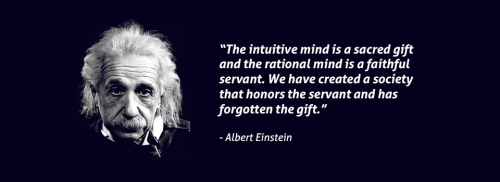
the-intuitive-mind-blue


reference: Scientology and Presentiment

Several commenters speculated as to my purposes for posting Scientology and Presentiment.   My purpose was simple: I wanted to hear what other people thought about it.  As far as implications are concerned – that is the question I asked folks to weigh in on – my view before I posted was largely reinforced by considering the hundreds of comments.

From my perspective, the most important implication is that it is more evidence that Scientologists are trained into constructs – to the point of confusing the map for the territory.  Their attention is focused with a great deal of intention and discipline on mental trauma.  Conscious, two-valued logic based, and three-dimensional time-space construct based perception is finely disciplined. This results in increased focus and force of intention.  The unthinking, yes/no binary device called the e-meter facilitates this training. In exercising such scientologists are led toward attainment to pre-defined abilities and states of consciousness – known as end phenomena in Scientology auditing.  They are promoted and preached as static, permanent states (again using two-valued logic, materialistic terms).   I have seen evidence of people becoming better at communication, problem solving, personal responsibility, handling of upsets, and moving out of fixed conditions through application of these constructs.  Sometimes they even achieve alleviation of psychosomatic disabilities along the road.

Then, rather consistently, I see them forfeiting their intellectual honesty and curiosity in vain defense of what got them a boost in the aforementioned abilities.  In the course of that defense I have witnessed those people become decreasingly effective at communication, problem solving, personal responsibility, handling of upsets and dealing with fixed conditions.

One faculty that is critical to spiritual growth is neglected, and then disabled, along the scientology route.  In my view it is at the heart of the decline and reversal noted above.  That is intuition.  When I use the term intuition I use it in its broadest possible sense.  That includes what the world at large considers extra sensory perception (including presentiment) and cognition and what Scientologists have referred to as ‘OT abilities.’

It has been said that the sixth sense could be considered conscience and the seventh sense intuition.  I think that paradigm makes a lot of sense and have found it workable in practice.  If one abides and nurtures a healthy conscience, attention and awareness is cumulatively freed to perceive and explore greater horizons.  That includes those horizons that are not accessible to the traditional five senses; but are visible through intuition. In Scientology, once the aforementioned, dictated abilities are attained (and even during the quest), one is required to forfeit his conscience.  I covered how that occurs in the books What Is Wrong With Scientology? and Memoirs of a Scientology Warrior.  I cover it in greater detail in A Course on Graduating From Scientology, and suggest means for not only recovering conscience but also rising to the level of intuition.

Initially, intuitive powers are largely ignored in Scientology.  As much as Hubbard at times preached the value of pursuing positive gain rather than negative gain (e.g. mid-fifties Ability Congress, Freedom Congress, etc) the scientology bridge ultimately focused on virtually nothing but attempting to remove the negative.  Hubbard went so far to definitively announcing a ‘law’ back then that if one focused on disability he would ultimately get more disability and if he focused on ability he would get more ability, and then constructed the entire bridge in defiance of that law. In scientology one’s attention  is focused on removing disabilities. One begins his auditing with lengthy sessions defining Dianetics and Scientology constructs.  He learns early on that nothing proceeds unless the simple ohm meter (the emeter) with its mechanical yes/no answers green lights it.   Attention is focused so as to detect the negative, that which is said to be foreign to the being’s natural state. So focused, the meter ultimately proves there is no end to the negative gain quest (reacting as it does to thought’s or intention’s interaction with the physical body).   A number of provisions are enforced to make the constructs real.  For example, along the way,  if one does not think in pictures, he is treated as a special aberrant case in need of remedies that will get him to think by creating pictures.  Then hundreds of hours can be spent auditing out the now-considered malady of thinking in mental image pictures.  Or, if a person does not originate incidents from past lives, again he is treated as a special case and subjected to special remedies.  Those include running incidents from movies the person may have seen.  It even encourages the running of imagination as reality until such time that the person believes that imagination is in fact reality.

Exacerbating matters is scientology’s considerable thought policing that trains a person to rein in intuition.  For example, the scientologist is trained to understand that any negative or ‘unkind’ thought he or she might entertain about L. Ron Hubbard or his appointed scientology ecclesiastics is the result of undisclosed crimes the thinker has committed or deeply seated evil intentions he or she harbors.   That results in lengthy, traumatic, and very expensive interrogations on the e-meter to remedy the ‘cause’ of such intuition.

By elevating the emeter above judgment and understanding, the two-value logic construct is cemented in place.  The all-knowing meter, being a two-valued, binary (charged or uncharged?) device guarantees that.

L. Ron Hubbard once preached against developing meter dependency.  I think he understood when he did so that the last thing one wanted to do in search of greater spiritual ability was to synchronize one’s psyche against a crude electronic instrument.  But, like with so much in Scientology, he also preached the precise opposite.  For example, in 1978 – his self-proclaimed year of greatest technical breakthroughs – he ordered hundreds of long-time, dedicated Sea Org staff to hard labor concentration camps when the meter determined, in most cases against obvious available evidence, they were anti-social personalities unknowingly out to sabotage Ron Hubbard.  In the early eighties he instituted a rundown – and demanded its application to all senior scientology ecclesiastics – to conform not only intuitive perception, but perception seen with the naked eye or heard with the ear (see, TheTruth’ Rundown).  Again, we run into that super-charged word as the only one that can accurately describe the result of yet another scientology dichotomy, cognitive dissonance.

Some of the faculty of intuition can be brought out in the solo auditing process.  But, for the most part it is lost by losing reality for the construct while engaging in continuous, active thought stopping to conform with scientology’s thought policing.   Should the practitioner even consider the construct as construct, intense thought patrolling (as summarized above) is employed to correct him.  What is never permitted to be recognized (which an unmolested or nurtured intuition would easily perceive) is that it is the process of exercising intention across distance – and communicating telepathically – that hones intuitive powers.  It is not that which one focuses on, extends intention toward, and communicates with that does the trick.  When the construct is implanted as reality – and  it is with more force than any Christian or Muslim sect – the scientologist becomes to greater or lesser degree forever the effect of that construct.  Again, the meter  consistently proves the construct as reality.  As a result the upper OT levels can become the route to slavish compliance to the perceptions and the guiding laws of the physical universe.  More on this in a Course on Graduating from scientology, and possibly later posts.

There are a lot of benefits to be had from increasing focus and power of intention as I have acknowledged in this essay.  The question I pose is, at the end of the day is the effort worth the cost in scientology?   For many, they consider that it is.  Provided those who fit into that category respect the rights of others not similarly inclined they have nothing to fear from me.  I have spent my entire adult life working to guarantee their right to continue along that path.  But, now my attention and intention is directed toward working with those who intuit that there are in fact broader horizons than Scientology permits exploration of.

Scientology and Presentiment


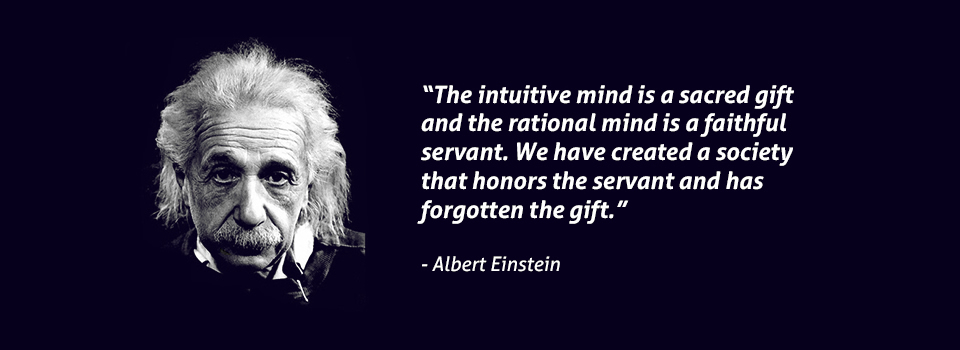
human-presentiment

More than thirty years of research has demonstrated rather conclusively that the average human being when connected to a galvanic skin response detection device (generic name for a Hubbard Electro-psychometer) routinely registers presentiment of about five seconds.  That is,  the meter reads on average 5 second prior to the subject being provided with a concept to respond to.  This research has been performed on people taken off the street, with no previous psychic or spiritual training or study.  It has been conducted applying exacting scientific standards.

What do you reckon the implications of these findings are to someone who has received hundreds of hours of standard Scientology auditing?   That is, a process in which the practitioner is only permitted to address those concepts or incidents that react on the meter only at the precise end of the major thought as expressed in words by the auditor. 

 A few books off the top of my head where the referred to research is discussed:

The Field by Linda McTaggart

The Intention Experiment by Linda McTaggart

The End of Suffering by Russell Targ and J.J. Hurtak

Entangled Minds by Dean Radin

Awakening – Part II


Reference: Awakening from scientology

Using scientology parlance, we begin by attempting to help people move above ‘know about’ on the ‘know to mystery scale.’    I have found plenty outside of scientology that explains and validates the sequence of Hubbard’s scale; illuminating the reason for the relatively high position for ‘not know.’  Thus, the Tao Te Ching – a book Hubbard once credited as offering in application all that scientology could hope to attain through its psychotherapeutic methodologies and training – teaches:

The Master leads; by emptying people’s minds

and filling their cores, by weakening their ambition

and toughening their resolve.

He helps people lose everything they know,

everything they desire, and creates confusion

in those who think that they know…


…The ancient Masters

didn’t try to educate the people,

but kindly taught them to not-know.

When they think that they know the answers,

people are difficult to guide.

When they know that they don’t know,

people can find their own way…


…Not-knowing is true knowledge.

Presuming to know is a disease.

First realize that you are sick;

then you can move toward health…


Notwithstanding their seeming alignment with such concepts as the know-to-mystery scale, scientologists are taught to eschew such ideas in pursuing  and exuding certainty.  And yet it was application of them that led to their own indoctrination or ‘enlightenment’ in and with scientology.  Scientologists are plied with a continual diet of tearing down all schools of thought that preceded  scientology – even those that led to its creation.  These facts necessitate that our first several chapters focus on pointing out the inconsistency, illogic, and even absurdity of some of your core scientology conditionings.  Perhaps I haven’t done it as ‘kindly’ as the Tao would prescribe.   Nonetheless, I want to make clear the purpose for doing so.  I am not doing it in order to replace your faulty stable data in order to become a new director of your destiny, but instead I hope to assist toward ‘when they know that they don’t know, people can find their own way.’   In that regard, the second reading recommendation that I make (the first being The Tao Te Ching – An English Translation by Stephen Mitchell) is a classic novel called Siddhartha by Herman Hesse.

Siddhartha is the quintessential lesson on the virtue – even necessity – of blazing one’s own path.  Even if you read it many years ago, I suggest that if you are seriously exploring the idea of moving  beyond and above scientology that you read it again.  Evaluate your scientology experience against Siddhartha’s experience.  Siddhartha sublimely demonstrates that the very act of becoming a follower or belonging  is anathema to enlightenment.   If in being introduced to new ideas and horizons one in particular seems to be the golden goose that will continue to forever lay you golden eggs, hark back to Siddhartha.  Clinging to one-stop enlightenment sources can defeat the entire purpose of the quest. Siddhartha also reminds us that when in doubt or despair it is rejuvenating to turn to and fully enjoy the  wonderment of the simple present; the Zen transcendence of doing what one is doing while doing it.

A system of thought purporting to be the ‘science of certainty’, that overtly asserts the goal and product of boiling all of creation down to simplistic blacks and whites, can be seen in the light of the wisdom from the Tao (and even scientology’s know-to-mystery scale) to potentially be the conveyor of a sort of sickness.  The resultant awareness myopia  – the death of life-promoting curiosity – is held firmly in place by ego and pride.  It requires an adopted air of superiority to automatically dismiss any ideas or information beyond one’s own ism or ology.  The certainty that one need not continue to look and to search and to find is protected and bolstered by pride in having arrived, having achieved all there is to know.

The disability (or as the Tao puts it, sickness) concomitant with such pride is described in Power vs. Force:

In our discussion of the levels of consciousness, we noted that one of the downsides of Pride is denial.  Every mind engages in denial in order to protect its “correctness” – this begets the fixity and resistance to change that prevents the average consciousness from advancing much more than five points in a lifetime.  Great leaps in levels of consciousness are always preceded by surrender of the illusion that ‘I know.’  Frequently, the only way one can reach this willingness to change is when one ‘hits bottom’, that is, by running out a course of action to its end in the defeat of a futile belief system.  Light can’t enter a closed box; the upside of catastrophe can be an opening to a higher level of awareness.  If life is viewed as a teacher, then it becomes just that.  But unless we become humble and transform them into gateways of growth and development, the painful life lessons we deal ourselves are wasted.

Awakening from scientology

I have been administering a course in graduating from scientology for the past couple months.  While doing so, I have been writing and sharing with students the chapters of an in progress book on the subject.  I recently added an introduction to the course/book as I recognized it required a further undercut.  I am publishing that introduction in three parts here as it might serve to spark productive thought and discussion.

A course in graduating from scientology

Introduction – Part I

One of the most difficult traps that scientology creates for minds is that of creating an arrogant sense of certainty in the member.  It is ultimately the ceiling that keeps people beholden to scientology, afraid to explore outside of it, and thus serves to entrap them within its own limitations.  What makes it so binding for scientologists is that they are taught that such an attitude has that effect at the outset of their studies. That is, the first barrier to learning is the student thinking he already knows it.  Scientologists apparently never think that the datum might apply once they had learned all there was to know about the subject that taught them that very datum.  That type of tricky dichotomy is peppered throughout the subject.  It is one thing that makes reasoning, discussion or debate on scientology so confounding.  A scientologist is only permitted to view the subject within the parameters of its own nomenclature, constructs and logic. He must never permit the thought to enter his own mind, ‘is there more to life than I have been instructed?’

As we shall see as we progress, scientology is finite.  It consists of the words of one man who wrote and lectured on the subject between the years 1950 and 1986.  By firm policy scientology enforces the notion that those thirty-six years of observations by one man are all that need be known on the mind and spirit and a host of other subjects.  It even instills the idea that to think or explore outside of the box of Hubbard words is dangerous.  In the book Power vs. Force David R. Hawkins succinctly described how such mental mechanics generally obtain:

The truth of each level of consciousness is self-verifying in that each level has its native range of perception, which confirms what’s already believed to be true.  Thus, everyone feels justified in the viewpoints that underlie his actions and beliefs. 

Presumably, the reader has to some degree shaken the scientology tenet that if it isn’t written or spoken by L. Ron Hubbard it is not true nor worth knowing. Otherwise, why would you even pick up a book entitled Graduating from scientology?  Nonetheless, in my experience the notion of fully self-contained infallibility is so heavily implanted with scientologists that it tends to come off in stages or layers.  It is common for scientologists, and even former scientologists, to continue to weigh any new data they encounter on the mind and spirit against a hidden standard, ‘how does it measure up against what scientology holds?’  Measuring up is not the problem.  Our course of exploration is all about comparing and contextualizing scientology indoctrinations.  It is a virtual exercise in Hubbard’s Logic 8: a datum can be evaluated only by a datum of comparable magnitude.  The problem arises when your mind is trained to work on an automatic default (read thought stopping) where any data, no matter how vital and workable, is discredited and discarded to the degree it does not agree with one’s scientology indoctrination.  Scientologists come to know about scientology and in the process are convinced that they know all there is to know.

That is a perfectly normal state of affairs for a monotheistic religious belief system.  For those seeking the comfort and security that type of system lends to adherents, you would be well advised to drop this book right about now.  This course of exploration is for those who never signed up for such when they embarked on scientology study.  This exploration is for those who got involved in scientology from the beginning as part of a search for truth, wisdom, and enlightenment.