
Category Archives: Scientology

Why Bother?

Some hard-core ‘independent’ Scientologists have ruminated  among themselves lately the idea that I am somehow trying to bring down L. Ron Hubbard and Scientology.  Otherwise, they reason,  ‘why wouldn’t he just move on and let it be?’   I am going to try to address this concern as directly and succinctly as I can.

L. Ron Hubbard developed a number of unique, aggressive methods for tackling problems of the human psyche.   Used intelligently there is nothing that compares to their direct, predictable effectiveness in intensifying present awareness.

However, there is a potential trap in the fields of therapy and spiritual practices discussed by Ken Wilber in his Kosmic Consciousness interview series that applies in spades to Scientology.  In segment eight of the series, Wilber speaks of people attaining ecstatic, exalted altered states in their particular discipline that they consider to be so miraculous as to be without compare.  They are convinced that they have found the only way, which results in a sort of tunnel vision and puts a figurative ceiling on their own continued growth and development.  Such people become opinionated, exclusive and intolerant – ultimately repelling others from experiencing the transcendence they experienced and losing whatever they gained in the process.

This trap is particularly acute in Scientology, because along with the peak and plateau experiences it delivers, its scripture is saturated with reinforcement of this sense of only-one way and superiority to mere mortals.  As intensively and effectively as Scientology can focus an individual’s attention and concentration, it just as intensively and effectively conditions those new found abilities onto worshipping and defending to the death the construct that made them possible.

In an ironic way, the zealous, judgmental, super egoic, ‘I will save you if I have to kill you’ mentality of the advanced Scientologist serves as testament to the effectiveness of that which they are hell-bent on defending and promoting.

Just as assuredly, it is evidence that somewhere along the line the science of ‘knowing how to know’ is converted into the practice of ‘knowing so best that we had better not be exposed to learning anything else and not allow anyone else to either’.

The observation I am trying to share is that it is this vicious cycle that is at the root of the demise of the methodologies of Dianetics and Scientology.  It is the cause of every other ill – disconnection, fair game, Simon Bolivar, violence in management, money is everything,  image is everything, you name it – every other ‘situation’ that folk continually mistake for the ‘why.’

I have witnessed tremendous relief, rehabilitated ability to learn, and renewed capacity for transcendence by getting this ‘why’ understood by many who have devoted their lives to Scientology.   I have also effectively helped a number of people with Hubbard methods by using them – sans the only-one religious indoctrination;  people who knew little to nothing of Dianetics and Scientology when they came to me.

It is for this reason that I believe the ideas of L. Ron Hubbard are doomed to the extent they are not used in an integral (integrated) fashion.   The whole package – taken as the whole package requires it be taken – leads inevitably to all of the ills ex-scientologists, those effected by Scientologists, and Scientologists (including and especially independent ones) seem to make a pastime out of clamoring about.

Why do I bother?  Because I want to help free those who are stuck in this Scientology dichotomy, and because I don’t want to see the demise of ideas and discoveries that can be effective in helping people in the future.

What’s Going On?

I came across an interesting passage in a book – the passage originally published in 1963 – by a prominent psychologist predicting quantum advancements in human consciousness by the marrying of religious and philosophic wisdom with rapidly evolving science. It is fifty years later and it seems Scientology is only now beginning to go through the throes of differentiating the adults (truth seeking spiritualists and values inspired scientists) from the children (flat earth religionists and reductionist-mechanistic inclined scientists).  Scientology seems, to steal a verse from U2, stuck in a moment that it can’t get out of.  From Religions, Values, and Peak-Experiences, by Abraham H. Maslow:

These two groups (sophisticated theologians and sophisticated scientists) seem to be coming closer and closer together in their conception of the universe as ‘organismic’, as having some kind of unity and integration, as growing and evolving and having direction and, therefore, having some kind of ‘meaning.’ Whether or not to call this integration ‘God’ finally gets to be an arbitrary decision and a personal indulgence determined by one’s personal myths.  John Dewey, an agnostic, decided for strategic and communicative purposes to retain the word ‘God’, defining it in a naturalistic way.  Others have decided against using it also for strategic reasons.  What we wind up with is a new situation in the history of the problem in which a ‘serious’ Buddhist let us say, one who is concerned with ‘ultimate concerns’ and with Tillich’s ‘dimensions of depth’, is more co-religionist to a ‘serious’ agnostic than he is to a conventional, superficial, other-directed Buddhist for whom religion is only habit or custom, i.e., behavior.

Indeed, these ‘serious’ people are coming so close together as to suggest that they are becoming a single party of mankind, the earnest ones, the seeking, the questioning, probing ones, the ones who are not sure, the ones with a ‘tragic sense of life’, the explorers of the depths and of the heights, the ‘saving remnant.’  The other party then is made up of all the superficial, the moment-bound, the herebound ones, those who are totally absorbed with the trivial, those who are ‘plated with piety, not alloyed with it’, those who are reduced to the concrete, to the momentary, and to the immediately selfish.  Almost, we could say, we wind up with adults, on the one hand, and children, on the other. 

The Great Decompression

I borrowed, or coined by inspiration, from Viktor Frankl (Man’s Search For Meaning) the idea that decompression was the first and most important step in recovering from the Scientology experience with an upward trajectory.  Frankl – having himself survived years of imprisonment in Nazi concentration camps, and attempted to help others similarly situated upon release – noted that an adjustment period was critical for someone coming out of a strictly controlled environment to a relatively free society.  He likened it to a deep sea diver submerged for several hours far beneath the surface.  One must bring the diver back out from under the tremendous pressure he has adjusted to on a gradient basis or he will suffer from Decompression Sickness, also known as the bends. Similarly, if a person imprisoned – even mentally – in inhumane conditions, conditioned to think and act in super-compliant ways while developing all manner of deceitful (albeit as justifiable as they may be) means to survive, comes out acting like he owns earth he is going to be in for big, ugly and possibly devastating losses.

Over time I have exchanged observations with other counselors about a number of folks that we guided and assisted through the Scientology Underground Railroad – or Decompression Road.  One pattern we all have observed, and taken terrible losses on, is Scientologists entering the family of humanity with the exclusive, arrogant and judgmental attitudes they developed to survive in Scientology culture.  All of us have expended a great deal of resource and effort in helping to clean up messes such attitudes have created, and in getting people who exhibit those attitudes back on their paths after the inevitable smack downs society tends to deliver in response.   For those going through that process now, and who are discomforted absent orientation to L. Ron Hubbard references, everything I have noted thus far in this article is in complete accord with Scientology notions of the efficacy of tackling problems,development and life on a gradient scale; and even the ethics conditions formulas (see Non- Existence condition and formula).

One of the first posts on the Milestone 2/iscientology blog – created largely in protest of my books and this forum – was a piece attempting to discredit this idea of decompression as some psych-based attempt to belittle Operating Thetans and put people at introverted effect.  It reasoned that former Sea Org members and public OTs who bought into the idea they could use a tad of decompression as part of their gradient entry into the community of fellow human beings were victims of an attempt to put them at groveling effect of the psych-indoctrinated ‘wog’ world.  By God, the MS2ers proclaimed, we need to bring society up to our standards, Revenimus! (In keeping perhaps with the Class VIII indoctrination, ‘you are the people who own the planet’ – see Memoirs of a Scientology Warrior).  This mentality of wanting to cling to the inside is understandable (see e.g. the films  The Shawshank Redemption and One Flew Over The Cuckoo’s Nest – I know you have all seen them, but watch them again with the Scientology experience in mind).

These thoughts arose when considering a general response to the many inquiries I have received lately asking me which of my three books ought to be read in what sequence.   That includes a lot of non-Scientologists asking what book might appeal to or help a Scientologist family member or friend. My answer is always a question, eliciting information on where the person is at on the decompression process.  When I know something about their circumstances I can recommend the single book that I think might help the person concerned.  They do not necessarily flow one to the next in the order they were written.  And all three of them aren’t for everybody necessarily.

So here is a short generalized guide to whom I believe the three books individually might appeal to, and hopefully help  –  in alignment to degrees of decompression already experienced by the concerned person.

The Scientology Reformation.

This book was written primarily with Scientologists still connected with the church in mind.  It is anchored upon L. Ron Hubbard references and attempts, on a gradient basis, to get a Scientologist to observe for himself or herself just how far adrift Scientology Inc has strayed from the intent and purposes memorialized (at least in some places) by its founder.  It introduces hope that one need not reject all of Scientology, in order to escape and even to take a stand against its abuses.

What Is Wrong With Scientology? Healing Through Understanding

This book would likely be dropped like a radioactive rock by the time a Scientologist in good standing read the first sentence of the introduction.   It is addressed more to people who are already out of the church, and for whom turning back is no option.  It is a detailed presentation and analysis of the features of Scientology that tend toward entrapment.   It describes in some detail the sum and substance of what Scientology’s effective processes are  in order to set the table for analyzing what is wrong with it and how it is ultimately used to entrap.   If one only mindlessly makes a break and declares a wholesale rejection of everything scientology, one tends to become as glued to it as ever, albeit from the opposition vector.  That is because he or she never took the time to understand and come to grips with what salutary aspects of it may have kept one pursuing it in the first place.  If one understands that, one can transcend the experience in a more desirable state than victimhood.

Memoirs of a Scientology Warrior

Because of the personal, autobiographical nature of this book and its consequent gradual, real time and subjective introduction to Scientology this can inform someone never involved in the subject with a perspective they will get nowhere else.  That is, what attracts and keeps one involved in the subject.   Popular books and films have been woefully two-dimensional and inaccurate in that regard.  They only focus on fear factors, which for those involved had next to zero effect in garnering their voluntary, self-determined involvement (the involvement that creates the most lasting effect on someone).  Many who have read it remarked that reading another’s real time experience of getting into, developing into a crusader for, and then transcending out of it prompted them to review their own experience more honestly, fully and rationally.  And that had a liberating effect upon them.

Memoirs is probably akin to a post-doctorate extension of the ‘what is wrong with Scientology’ analysis.  But not with a lot of opinion.  For the most part I let the facts do the talking.

While I still regularly use the term, and the model, of ‘decompression’ I am more often using it with a modifier to better describe what it is I am trying to accomplish: Decompression with an upward trajectory.

Link to all three books:

Mark Rathbun books on scientology


Scientology Perfidy

The following is an excerpt from Mark Bunker’s upcoming documentary ‘Knowledge Report’. It is an accurate vignette of the kind of perfidy that is common at the highest levels of corporate Scientology.  Recent events in the ‘independent’ field caused me to ask myself, borrowing a phrase from the immortal Yogi Berra, “Is this deja vu all over again?”

And for the rest of the story see, Miscavige Throws John Travolta Under The Bus.

An Open Letter to Eddie King

I tried to walk in your shoes on Saturday.

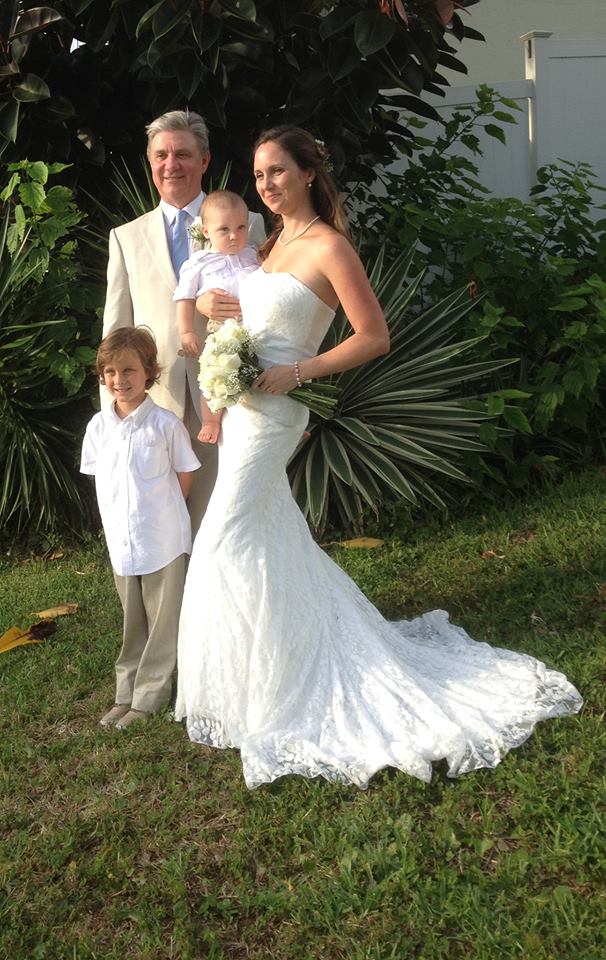
The honor of acting as the father of Christie at her wedding was bestowed upon me.

Christie may have chosen me for this privilege because I remind her so much of you.  She has told me as much on many occasions over the past four years that I have known her.  Just about every time I flip a song, she says with her inimitable smile, ‘my dad and I used to listen to that.’   From Bob Marley to Van Morrison, it seems you and I ride to a similar rhythm.

christie.me

Several times Christie has come to me for life counsel that one would normally reach out to a father for.  And when it is done she often reminisces with a glimmer in her eye that that is exactly how you would have handled it.  Ironically, when such nostalgic moments turn into tears it seems I even console her in a similar way that you used to.

I want to thank you for giving me fulfilling learning and growing opportunities. My only potential child was aborted in compliance with the firm policy of the priesthood of your church that I served most of my adult life in.  But because of your chosen absence I have been graced with the chance to come in touch with a bit of perhaps humankind’s greatest developmental growth experience: parenting.    I have not had to shed the blood, sweat and tears you have in bringing children through birth, childhood, adolescence and into adulthood.   Instead, I have been given the opportunity to temporarily substitute for you for one graduate of yours of that evolution.

rinders

I gave Christie away on Saturday with no doubts or reservations whatsoever.   As noted, apparently I have walked through life with a similar perspective to yours.   Based on the accumulation of whatever wisdom I’ve  been able to retain during that journey, I can assure you there is no finer man to be found than her husband Michael John Rinder.   He is a man of conscience molded in a crucible of adversity that few are adventurous enough to ever experience.  Few have lived a life of such selfless devotion and weathered as many vicissitudes as Mike.  And of those few, I am unaware of any who came out the back end with so much love, hope and tolerance as Mike.  You could not find a better father for your grandchildren.

jackandshane

Your grandchildren are the living proof of what I am trying to convey to you.  At fourteen months of age, Jack is a veritable lighthouse.   I think anyone who has been in his presence will agree.  He lights up every space he enters.  Shane, all of six years old, is as intelligent, mature, and at the same time insouciant, as any child I have known.

And at the center of this family, the sun that nourishes it with life-giving light, of course, is the Queen of the Slipstream – your daughter Christie King Rinder.

Thank you for letting me know and be part of this incredible family.

I want you to know that I still abide by our shared team sports ethos.  I recognize and accept that I am merely a lowly substitute.  I am doing my best to simply not let the comfortable lead you – the star – created slip away while you starters catch your breath.

There is an old proverb that says, your home is where your heart is.  When you find it in your heart to come home I will gladly step aside and be the first (of thousands) to celebrate you.

Letting Go

When I write of the idea of cultivating the skill of ‘letting go’, some Scientologists react as if I am from the planet Farsec (the alleged origin point of the universe for all psychs, reference: Memoirs of a Scientology Warrior).   On the one hand this is surprising because it is precisely what one does when one experiences a spiritual ‘release’ in a Scientology session.   On the other hand, the idea of employing and refining that capability in life is looked upon as blasphemous.  It is in a way since so much in Scientology implants precisely the opposite idea in believers.

To help get the concept across I have many times recommended folk read and attempt to think with Tao Te Ching (my recommended translation, The Tao Te Ching, an English Translation by Stephen Mitchell).   A number of people have written  to or told me that they have done so, and find the idea of ‘letting go’ liberating and useful in their quests for self- actualization (equinimity attendant to becoming who one really is and attaining toward one’s full potentialities).  Still many want the ‘tech’ to it or an instruction manual of sorts.

I came across a good description of breaking ‘letting go’ down into a process on buddhanet. net.  It is below for your perusal.  I don’t know who the author is and I don’t even know what all is on buddhanet or who operates it. All that I know is that the following description of the process rings accurate in many ways and may communicate to, and be found to be useful by, some.

Letting Go from buddhanet

If we contemplate desires and listen to them, we are actually no longer attaching to them; we are just allowing them to be the way they are. Then we come to the realization that the origin of suffering, desire, can be laid aside and let go of.

How do you let go of things? This means you leave them as they are; it does not mean you annihilate them or throw them away. It is more like setting down and letting them be. Through the practice of letting go we realize that there is the origin of suffering, which is the attachment to desire, and we realize that we should let go of these three kinds of desire. Then we realize that we have let go of these desires; there is no longer any attachment to them.

When you find yourself attached, remember that ‘letting go’ is not ‘getting rid of’ or ‘throwing away’. If I’m holding onto this clock and you say, ‘Let go of it!’, that doesn’t mean ‘throw it out’. I might think that I have to throw it away because I’m attached to it, but that would just be the desire to get rid of it. We tend to think that getting rid of the object is a way of getting rid of attachment. But if I can contemplate attachment, this grasping of the clock, I realize that there is no point in getting rid of it – it’s a good clock; it keeps good time and is not heavy to carry around. The clock is not the problem. The problem is grasping the clock. So what do I do? Let it go, lay it aside – put it down gently without any kind of aversion. Then I can pick it up again, see what time it is and lay it aside when necessary.

You can apply this insight into ‘letting go’ to the desire for sense pleasures. Maybe you want to have a lot of fun. How would you lay aside that desire without any aversion? Simply recognize the desire without judging it. You can contemplate wanting to get rid of it – because you feel guilty about having such a foolish desire – but just lay it aside. Then, when you see it as it is, recognizing that it’s just desire, you are no longer attached to it.

So the way is always working with the moments of daily life. When you are feeling depressed and negative, just the moment that you refuse to indulge in that feeling is an enlightenment experience. When you see that, you need not sink into the sea of depression and despair and wallow in it. You can actually stop by learning not to give things a second thought.

You have to find this out through practice so that you will know for yourself how to let go of the origin of suffering. Can you let go of desire by wanting to let go of it? What is it that is really letting go in a given moment? You have to contemplate the experience of letting go and really examine and investigate until the insight comes. Keep with it until that insight comes: ‘Ah, letting go, yes, now I understand. Desire is being let go of.’ This does not mean that you are going to let go of desire forever but, at that one moment, you actually have let go and you have done it in full conscious awareness. There is an insight then. This is what we call insight knowledge. In Pali, we call it nanadassana or profound understanding.

I had my first insight into letting go in my first year of meditation. I figured out intellectually that you had to let go of everything and then I thought: ‘How do you let go?’ It seemed impossible to let go of anything. I kept on contemplating: ‘How do you let go?’ Then I would say, ‘You let go by letting go.’ ‘Well then, let go!’ Then I would say:

‘But have I let go yet?’ and, ‘How do you let go?’ ‘Well just let go!’ I went on like that, getting more frustrated. But eventually it became obvious what was happening. If you try to analyze letting go in detail, you get caught up in making it very complicated. It was not something that you could figure out in words any more, but something you actually did. So I just let go for a moment, just like that.

Now with personal problems and obsessions, to let go of them is just that much. It is not a matter of analyzing and endlessly making more of a problem about them, but of practicing that state of leaving things alone, letting go of them. At first, you let go but then you pick them up again because the habit of grasping is so strong. But at least you have the idea. Even when I had that insight into letting go, I let go for a moment but then I started grasping by thinking: ‘I can’t do it, I have so many bad habits!’ But don’t trust that kind of nagging, disparaging thing in yourself. It is totally untrustworthy. It is just a matter of practicing letting go. The more you begin to see how to do it, then the more you are able to sustain the state of non-attachment.

Keeping Scientology Working Revisited

The following is an excerpt from the book Memoirs of a Scientology Warrior.  It covers my introduction to the Policy Letter entitled Keeping Scientology Working.  In the past, we have attempted to discuss  how far this central religious tenet of Scientology ought to be adhered to given its thought-stopping potential.  That discussion degenerated into recriminations, character assasinations, and other indicia of thought stoppping.  Perhaps presented in a fuller context we can consider the effects of this indoctrination without instigating a riot.

From Chapter Seven:

This particular policy (still in use today) was originally issued in 1965. It pronounces that Scientology had by that point achieved “uniformly workable technology.” It states that the only troubles the organization ever encountered were because of incorrect application of that uniformly workable technology.  Therefore, KSW called for zealous enforcement of the standard application of Scientology. By “standard” was meant precise, unquestioning adherence to all technical and administrative instructions from L. Ron Hubbard.  No interpretations or alterations allowed. Only L. Ron Hubbard’s words, followed to the letter. Quite a bit of attention was paid by the course supervisors to each student, on a one-to-one basis, seeking to elicit agreement that they would follow KSW to the letter.

My struggle was attempting to accept that level of certainty, and agreeing to that level of steadfast devotion to the idea that Scientology was it, to the utter exclusion of any other ideas or philosophies – all without the experience of finding out for myself whether Scientology was indeed it.  I could not progress in my studies without first agreeing that the following ideas of L. Ron Hubbard were incontrovertibly true, and that I vowed to adopt and adhere to them:

–          Any inability to agree to the tenets of KSW was due to the fact that “the not-too-bright have a bad point on the button ‘self-importance,” and that “the lower the IQ, the more the individual is shut off from the fruits of observation,”

–          That “the [defense mechanisms] of people make them defend themselves against anything they confront, good or bad, and seek to make it wrong,” and that “the bank [reactive mind] seeks to knock out the good and perpetuate the bad.”

–          The idea that “a group [of people] could evolve truth” is inherently false.

–          That Hubbard relied on absolutely no major or basic ideas or suggestions from any other source in developing the world’s only workable mental/spiritual technology, which he called Scientology.

–          “Popular measures” and “democracy” have done nothing for humankind except “push him further into the mud.”

–          Humankind never before “evolved workable mental technology,” but instead only “vicious technology.” Scientology, therefore, must be “ruthlessly followed.”

–          The only common denominator among humans is the reactive mind. Therefore all agreements between humans who have not achieved the state of Clear can only be classified as “bank [reactive mind] agreement.”

–          “Bank agreement” can also be called “collective thought agreement.” Collective thought agreement is responsible for “war, famine, disease” and the development of “the means of frying every man, woman, and child on the planet.”

–          “The decent, pleasant things on this planet come from individual actions and ideas that have somehow gotten by the Group Idea.”

–          “It’s the bank that says the group is all and the individual nothing.  It’s the bank that says we must fail.”

–          “When somebody enrolls, consider he or she has joined up for the duration of the universe – never permit an ‘open-minded’ approach…If they enrolled, they’re aboard; and if they’re aboard, they’re here on the same terms as the rest of us – win or die in the attempt. Never let them be half-minded about being Scientologists.”

–          “The proper instruction attitude is, ‘You’re here so you’re a Scientologist. Now we’re going to make you into an expert auditor no matter what happens. We’d rather have you dead than incapable.’”

–          “We’re not playing some minor game in Scientology. It isn’t cute or something to do for lack of something better.  The whole agonized future of this planet, every man, woman and child on it, and your own destiny for the next trillions of years depend on what you do here and now with and in Scientology. This is a deadly serious activity.  And if we miss getting out of the trap now, we may never again have another chance.”

The tract dramatically drove home some conflicting ideas.  On the one hand, Scientology is portrayed as the only technology for enhancing and preserving individuality.  On the other hand, by the end of the policy Hubbard is demanding that no one be allowed past the first bulletin in Scientology training courses without assuming the identity of hard-core Scientologist, and agreeing to abide by the rules on the same terms as everyone else. The conflicting concepts between the group and the individual were finally resolved by me with the mental computation that the only way to truly realize true individuality is to forfeit individuality in favor of the purposes and goals of the group.

In retrospect, had it not been for the fact that my life seemed so bleak and hopeless, given the circumstances of my brother, I never would have agreed to this indoctrination.  But the world and the state of mental health in my view were as bad as Hubbard described, and up to then I had not found anyone else who saw what I was seeing in such black-and-white terms.  And so I decided to agree and to abide, even though deep inside I did not fully agree.

Only 30 years later did I fully appreciate how significant that moment of intellectual surrender would become. The realization occurred when I read Thomas Paine’s The Age of Reason, which described precisely what I had done with my fresh, sharply-honed intentional abilities:

 It is impossible to calculate the moral mischief, if I may so express it, that mental lying has produced in society. When a man has so far corrupted and prostituted the chastity of his mind, as to subscribe his professional belief to things he does not believe, he has prepared himself for the commission of every other crime.

A Little Perspective

Excerpted from “The Paranoid Style in American Politics”, a 1964 essay by Richard J. Hofstadter:

“The paranoid spokesman, sees the fate of conspiracy in apocalyptic terms — he traffics in the birth and death of whole worlds, whole political orders, whole systems of human values. He is always manning the barricades of civilization… he does not see social conflict as something to be mediated and compromised, in the manner of the working politician. Since what is at stake is always a conflict between absolute good and absolute evil, what is necessary is not compromise but the will to fight things out to a finish. Since the enemy is thought of as being totally evil and totally unappeasable, he must be totally eliminated — if not from the world, at least from the theatre of operations to which the paranoid directs his attention. This demand for total triumph leads to the formulation of hopelessly unrealistic goals, and since these goals are not even remotely attainable, failure constantly heightens the paranoid’s sense of frustration. Even partial success leaves him with the same feeling of powerlessness with which he began, and this in turn only strengthens his awareness of the vast and terrifying quality of the enemy he opposes.

“The enemy is clearly delineated: he is a perfect model of malice, a kind of amoral superman — sinister, ubiquitous, powerful, cruel, sensual, luxury-loving. Unlike the rest of us, the enemy is not caught in the toils of the vast mechanism of history, himself a victim of his past, his desires, his limitations. He wills, indeed, he manufactures, the mechanism of history, or tries to deflect the normal course of history in an evil way. He makes crises, starts runs on banks, causes depressions, manufactures disasters, and then enjoys and profits from the misery he has produced. The paranoid’s interpretation of history is distinctly personal: decisive events are not taken as part of the stream of history, but as the consequences of someone’s will. Very often, the enemy is held to possess some especially effective source of power: he controls the press; he has unlimited funds; he has a new secret for influencing the mind (brainwashing); he has a special technique for seduction (the Catholic confessional).

“It is hard to resist the conclusion that this enemy is, on many counts, the projection of the self; both the ideal and the unacceptable aspects of the self are attributed to him. The enemy may be the cosmopolitan intellectual, but the paranoid will outdo him in the apparatus of scholarship, even of pedantry. Secret organizations, set up to combat secret organizations, give the same flattery. The Ku Klux Klan imitated Catholicism to the point of donning priestly vestments, developing an elaborate ritual and an equally elaborate hierarchy. The John Birch Society emulates Communist cells and quasi-secret operation through “front” groups, and preaches a ruthless prosecution of the ideological war along lines very similar to those it finds in the Communist enemy. Spokesmen of the various fundamentalist anti-Communist “crusades” openly express their admiration for the dedication and discipline the Communist cause calls forth.”

You Will Know

Don’t bother reading Memoirs of a Scientology Warrior.   All I was trying to say was said much more succinctly and melodiously by others long before I bothered messing with it.

Lyrics:

Songwriters: ARCHER, MICHAEL D’ANGELO / ARCHER, LUTHER
Mmm…hmm…hmm…mmm…hmm… Yeah, yeah
When I was a young boy I had visions of fame They were wild and they were free They were blessed with my name
And then I grew older And I saw what’s to see That the world is full of pain And my dreams they left me
And then I got stronger Inside of the pain That’s when I picked up the pieces And I regained my name
And I fought hard, y’all To call by my place And right now you could ask me And it all seems in vain
[Your dreams ain’t easy] Your dreams ain’t easy [You just stick by your plan] You just stick by your plan [Go from boys to men] Go from boys to men [You must act like a man] You gotta act like a man [When it gets hard, y’all] When it gets hard, y’all [You just grab what you know] Got what you know [Stand up tall and don’t you fall] And my background sing
You will know [You will know], yeah…eah… [You will know] [You will know] You will know, you will know [You will know]
And I know you’re cryin’ ‘Cause it’s all in his vein And the things you want you can’t have It just all went away
But life ain’t over Hoo…hoo… Just grab the winds and make demands And the vibe will take you far
[Your dreams ain’t easy] Your dreams ain’t easy [You just stick by your plan] Stick by your plan, boy [Go from boys to men] Go from boys to men [You must act like a man] I know it ain’t easy [When it gets hard, y’all] it gets hard sometime [You just grab what you know] Yes, it does [Stand up tall and don’t you fall] Stand up tall, don’t you fall, and you will know, yeah
[You will know] [You will know] Ah…ah…ah… (You will know) [You will know] Hey, there’s no doubt about it [You will know] Hey, you will know
[You will know] You will know [You will know] Hey…ey…hey… [You will know] You will know, yeah [Oh, you will know] Hey…
[Your dreams ain’t easy] Your dreams ain’t easy [You just stick by your plan] Stick by your plans [Go from boys to men] Boys to men [You must act like a man] You must act like a man [When it gets hard, y’all] It ain’t hard, yeah [You just grab what you know] Grab what you know [Stand up tall and don’t you fall] Oh…oh…oh…
[Your dreams ain’t easy] [You just stick by your plan] Hey…hey…yeah [Go from boys to men] Boys to men [You must act like a man] I know it ain’t easy [When it gets hard, y’all] [You just grab what you know] Yeah… [Stand up tall and don’t you fall] Come on D and sing this song
[You will know] Yeah… [You will know] You will know [You will know] [You will know] Hey…
[You will know] [You will know] [You will know] [Oh, you will know]

Ripple In Still Water

We have been pretty much closed to folk visiting Casablanca over the past few months while I wrapped up Memoirs of a Scientology Warrior.  Now that the book is done and available I am scheduling people again for consultation.

I am in progress on the follow up book to Memoirs which will spell out in some detail how it is that I believe certain principles codified by L. Ron Hubbard can be sensibly practiced; that is, how they can be integrated, how they can evolve, and how people can learn from that to transcend.  One of the purposes of Memoirs was to set the factual foundation for that presentation.  It is difficult to communicate to closed minds that are implanted and conditioned to not dare think along those lines.  I have been labeled by some Scientologists as being like a ‘Nazi War Criminal’, ‘Gestapo’, and worse for attempting to have that conversation.  The reasons for such a reaction are pretty well spelled out in Memoirs.  Rather than waste time attempting to debate with such a mindset, I decided it made more sense for me to spell out the facts that led me to consider that people need to graduate from that frame of mind in order to get anywhere meaningful.  Hopefully Memoirs will help to accomplish that.  Certainly, the follow up book will be all about how to do that.

I am no longer wasting time with the necessarily interminable argumentation on what constitutes ‘standard technology’, ‘standard admin’, and such . You might come to understand through Memoirs how it is that Scientology is hardwired to create that perpetual state of conflict and how it will continue to manifest  down through the ages (to no possible substantive conclusions) if anyone in the future continues to find that activity worthwhile.  In either event, I don’t find that rancorous debate productive.  Most of the people who want to argue (or disconnect) on that subject don’t have much of a production record anyway, so it is like fighting with a gossamer of theory based on a patchwork of quotations.

Based on my several years of Scientology training/practice and based on my several more years of outside-of-Scientology study and practice, I deal with people one on one to try to help them move on up a little higher.   My view is that certain Hubbard principles integrated into and used in such wise brings about lasting results. Conversely,  robotically-applied, wholesale reliance on those principles leads to capture, captivity and ultimately to anguish. Those principles that don’t lead one any higher, or worse lead him or her lower, don’t figure into a program seeking transcendence from frightened, delusory states.  Incidentally, I am convinced that such principles won’t become any more popular either, no matter how much marketing, commanding and fighting one wants to apply to them.

I suggest I can help with a) repair Reverse-Scientology application people may have experienced, b)  repair/rehab any grade or level that might be incomplete or ‘out’, c) put one’s Scientology experience into perspective from which growth is possible,  d) graduate people from the cult and any lingering cult think, or fixation with the cult experience people might be walking around with, e) guide people toward a meaningful transcendence from their Scientology-inflicted obsessions, and f) help OTs transcend the captive, glass ceiling dimension they’ve been led into.

By popular consensus among independent Scientologists, communicated in various ways, the core ideas I propose and what I do cannot be accepted under the title ‘Scientology.’  I accept that.  So, there is no more reason to discuss the chapter of trying to win folk over to my ideas to the contrary.  It is history.

I do not go by any labels and I am not a member of, nor am I affiliated with, any groups.

So as to avoid any conflict or possibility for misunderstanding, I ask anyone interested in my services to first read Memoirs and What Is Wrong With Scientology?   That will give you a good sense of my philosophy about the subject of Scientology and those subjects it overlaps with.  A number of people have told me that by simply reading and thinking with either or both of those books helped them to resolve that which they would have come to me for help to remedy.  So, you might save yourself time and cheddar by simply reading what I have already had to say.  On the other side of the spectrum, I want people to know what I am about in advance so that we don’t waste your time or mine scheduling you for an activity that will offend you by conflicting with your religious beliefs.